
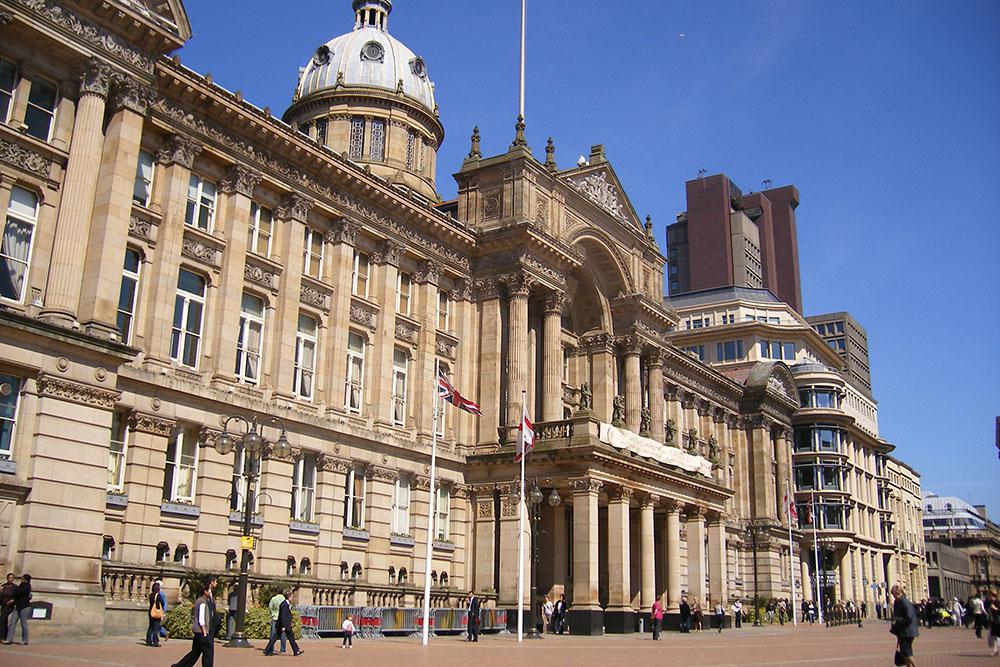
Birmingham is set to become a ‘net zero city’ in the coming years and the council has revealed how it intends to realise that ambition.
The council, now run by a coalition including the Liberal Democrats and Greens, said it wants Brum to be a place where development has been “designed to limit carbon emissions”.
The authority confirmed its net zero commitment in its draft Local Plan, a mammoth blueprint for the future of the city over the next two decades.
Achieving net zero is a key strategy when it comes to fighting climate change and means balancing the amount of greenhouse gas emissions with the amount being actively removed from the atmosphere.
The Labour government under Sir Keir Starmer last year described clean energy as the “economic and jobs opportunity of the 21st century” and said net zero sectors were growing faster than the economy overall.
But net zero strategies have been met with scepticism from those in the Conservative Party and Reform UK, with some arguing that current plans are too costly and unachievable.
Back in 2019, Birmingham Council declared a climate emergency and set a target for both the authority and city to become net zero carbon by 2030 – or as soon as possible after this date.
Its recently-published Local Plan sheds some light on how this could happen, describing becoming a ‘net zero carbon city’ as one of its most important objectives for the next 20 years.
The council says it will aim to:
- Ensure all new development achieves net-zero carbon emissions and is as energy efficient as possible.
- Have a “positive and bold” strategy for renewable energy.
- Make the most efficient use of Birmingham’s natural resources and minimise energy use.
- Minimise waste and promote a ‘circular economy’.
- Encourage re-use of existing buildings wherever possible.
On the last ambition, the council said historic buildings have an “important role to play” in Birmingham meeting its carbon targets.
“[They] can be part of the solution in our bid to reduce carbon emissions,” it continued.
“It’s important to make use of existing buildings to avoid further carbon emissions from the cycle of demolition and re-building.”
The council also stressed the importance of a “sustainable” transport system that reduces car use and promotes modes of travel such as public transport and cycling.
It went on to say that development in the city “must be designed to make walking, wheeling and cycling” the default choices for short trips in a bid to reduce car dependency.
The council also said it supports the electrification of lines across Birmingham’s busy rail network and added that community-led energy schemes will play an important role in achieving net zero.
“Like all big cities, Birmingham is constantly changing and will need to adapt to many different challenges over the coming years including climate change, the need for more housing and a changing economy,” the authority said.
“The Birmingham Local Plan sets a clear and strong vision and strategy for sustainable inclusive growth, aiming for a climate resilient future.”
Huge scheme ‘moving towards construction’
It was confirmed just earlier this year that Birmingham is moving forwards with a massive eco-friendly scheme that could contribute towards reducing carbon dependency.
Plans are currently proceeding to build the National Centre for the Decarbonisation of Heat (NCDH) at Tyseley Energy Park in a bid to create a ‘nexus for energy research and training’.
“With the climate crisis, it may be necessary to convert all of Britain’s housing to low-carbon heating […] within the next 20 years,” a planning document for the project said.
“This will require a massive increase in the manufacturing of heat pumps, new boiler designs and housing retrofit solutions.
“The NCDH aims to create new programs designed to allow Britain to catch up quickly by developing promising technologies and business models.”
The council said previously in June that this project was moving towards the construction phase despite “affordability challenges linked to inflation”.
It also revealed in its Local Plan that there are ambitions for Tyseley to become an “internationally leading location” for innovation and development when it comes to green technology, waste and more.
A spokesperson for the University of Birmingham added earlier this year: “[The NCDH] remains an important project for supporting the transition to low-carbon heat and advancing clean growth in Birmingham and the wider region.”











Comments
Add a comment