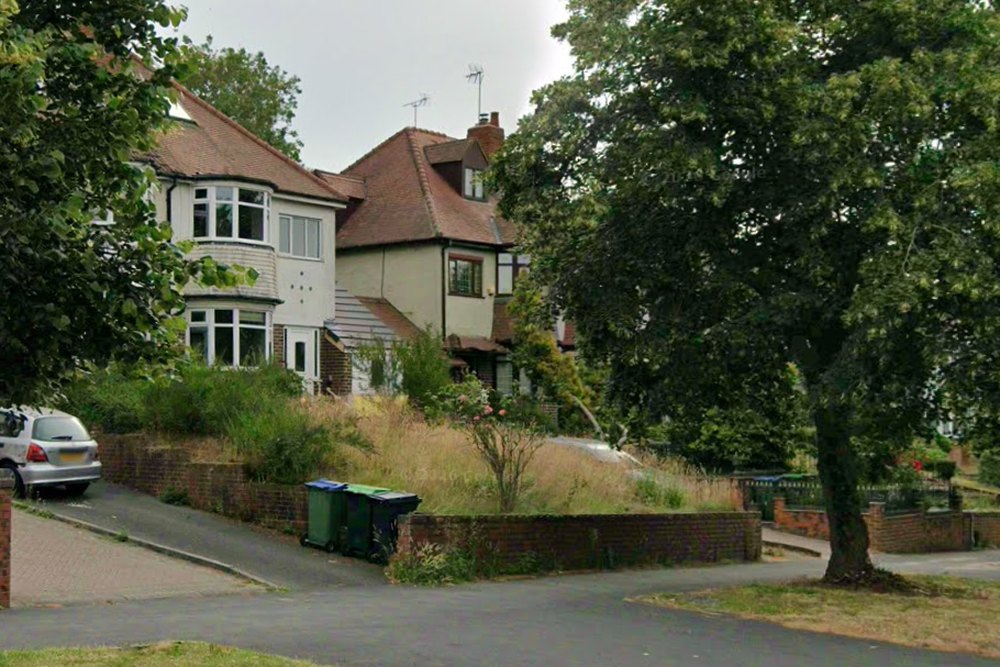
A home will still be allowed to be converted into a HMO despite rejections by council planners and a government inspector.
Sandwell Council rejected an application to convert the home in Wolverhampton Road, Oldbury, into a house of multiple occupation (HMO) for up to eight people in March but has now approved an application that will allow up to six people to share the home.
Having been rejected by Sandwell Council, an appeal was lodged with the government’s planning inspectorate in a bid to get the decision overturned but was thrown out with the inspector saying the proposed HMO would lead to more activity and added noise.
A total of 38 objections were made against the work before Sandwell Council’s planners decided on the application earlier this year.
The application was approved three days before Sandwell Council’s new article 4 direction – which requires all applications for new HMOs to go through the council’s planning process – came into force.
The tighter restrictions have been brought in over concerns about the number and concentration of HMOs in the borough as well as concerns over parking, litter, crime and anti-social behaviour, changes to character of neighbourhoods and the loss of family housing.
The new rules do not ban HMOs in Sandwell and do not apply to existing HMOs.
Throwing out the appeal, the planning inspector said: “The proposed changes would increase the massing of the property and result in an unusually shaped side elevation, distinguishing the building from those around it.
“The occupiers of a HMO would be more likely to live separate lives creating a greater number of comings and goings.
“The development would therefore increase the general level of activity at the site.”
Sandwell’s public health officers had objected to the application earlier this year saying the increase in people raised concerns about potential disturbance for neighbours.
“With multiple unrelated tenants, there is potential for frequent arrivals and departures at varying hours, including late at night and early in the morning,” the objection read.
“This increased foot traffic, car movements, door slamming, conversations outside the property, and general activity raises concerns about disturbance, sleep disruption, and loss of residential amenity for neighbouring residential properties which may lead to complaints.”
The local authority’s planners also found concerns with the application saying it could lead to problems for neighbours.
Rejecting the application, the council added: “The application property is a modest semi-detached dwelling, where the existing level of activity would typically be associated with a single-family household in terms of noise, comings and goings, and the times at which these occur.
“In contrast, occupants of an HMO are likely to live largely independently of one another, resulting in an increase in the number and frequency of comings and goings, as well as visitors and deliveries.
“Consequently, given the number of proposed residents, the HMO use would give rise to increased noise and disturbance, to the detriment of the living conditions of neighbouring occupiers.”
By Christian Barnett | Local Democracy Reporting Service
 Politicians react as government launches investigation
 Pressure building for council leader to be removed
 Plans to demolish historic hotel for new supermarket approved again
 Rent and service charge increases on the way
 Empty surgery could become care home